
Ledger 29 games completed to 100% · 4,180 hours logged Longest single file: 214 hours
A wooden desk under a brass lamp with an open ledger of handwritten tally marks, a pencil and a stopwatch
Every task, every collectible, every ending

We finish everything, and then we tell you whether finishing was worth it

Most reviews describe the first ten hours of a hundred-hour game. We play to the completion screen, count what the game asked of us on the way, and publish the point at which it stopped justifying itself.

29Games at 100%
4,180Hours logged
214Longest file, hours
0Guides consulted
The method

Four passes, and the interesting one is always the third

Everything is recorded by hand in a ledger as we go, because reconstructing it afterwards produces a story rather than a record.

Pass one

The intended route

Main path only, no side content, no optional areas. This is the game as its designers assume you will meet it, and we time it to the minute.

Pass two

Everything signposted

All side quests, all optional regions, all content the game actively points you toward. Usually where a game is at its best and occasionally where it collapses.

Pass three

The long tail

Collectibles, achievements, hidden endings, completion percentages. The part almost nobody reviews and the part that reveals what a designer actually values.

Pass four

The count

We total the tasks by type, calculate how many were distinct and how many were repetitions, and write the report from the ledger rather than from memory.

Why bother

A hundred hours of content and eleven hours of ideas is a very common ratio

Completion is where design intent becomes visible. A game that respects your time gives the long tail its own material: new locations, new rules, a joke that only lands if you have seen everything else. A game that does not simply multiplies what you have already done and calls the result content.

Both kinds are enjoyable in the first ten hours and they are almost impossible to distinguish there. The difference shows up at hour sixty, which is exactly where reviews stop. So we keep going, and we count, because counting is the only way to turn "it got repetitive" into a statement somebody can check.

  • Distinct against repeated. We classify every task and report how many were genuinely new. A game with 240 objectives and 12 templates is described that way.
  • No guides. Completion without help tells you whether the game communicates its own requirements. If we needed a wiki, that is a finding.
  • The abandonment point. We record the hour at which we first wanted to stop, and whether the game earned us back afterwards.
  • Endings included. All of them. Where a game hides its real conclusion behind full completion, we say whether that was worth the cost.
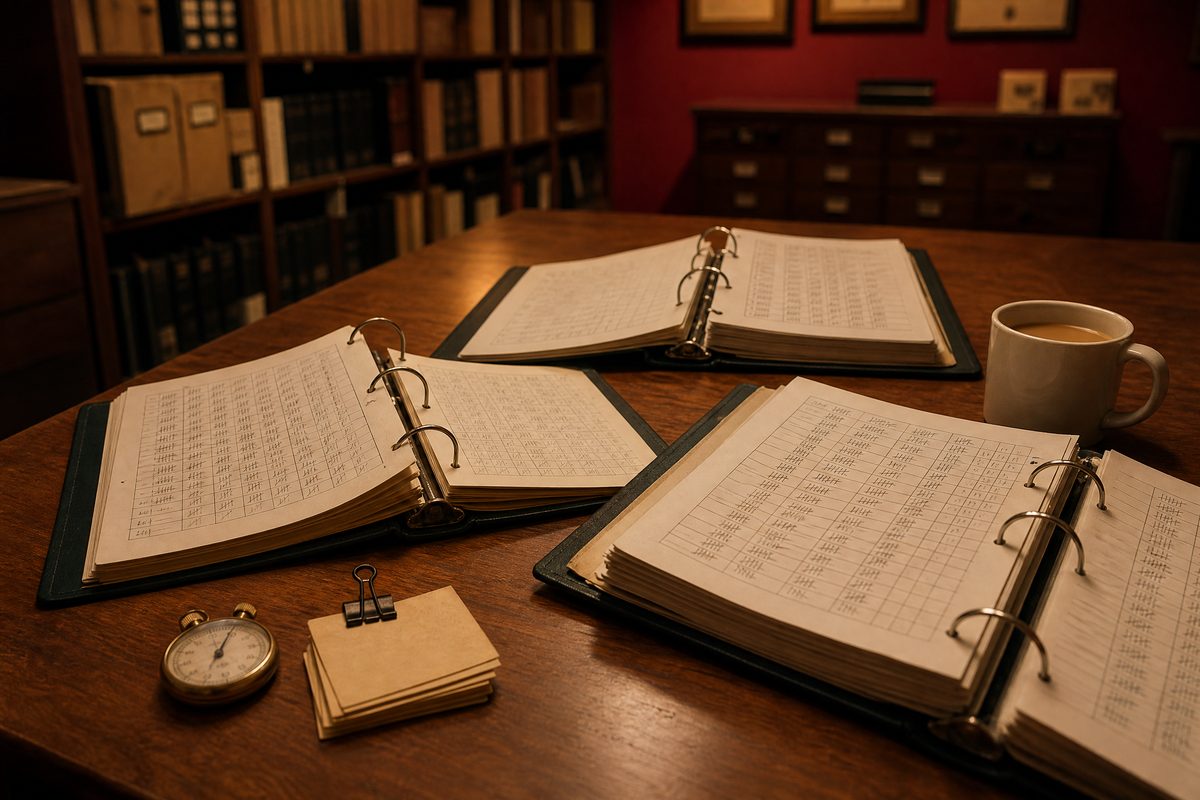
A records table with three open ring binders of ruled tally sheets, a brass stopwatch and a stack of index cards
Recent reports

Completed, counted and closed

Each entry lists total hours, the number of distinct task types we identified, and the rating.

The rating

One number, and it describes the whole game rather than the first act

Because we finish everything before rating anything, our numbers tend to sit lower than launch reviews. That is the point.

From the ledger's readers

What people use these reports for

"The stop-here recommendation is the most valuable thing I have ever read in a games review. I finished a game at hour forty on your advice and enjoyed it far more than I would have at eighty."

Reader · open world

"Counting distinct task types against total objectives should be standard. Once you see 341 against 19 written down, you cannot unsee it in any other game."

Reader · action RPGs

"I appreciate that you record the hour you first wanted to quit. Every long game has one and no other review admits it exists."